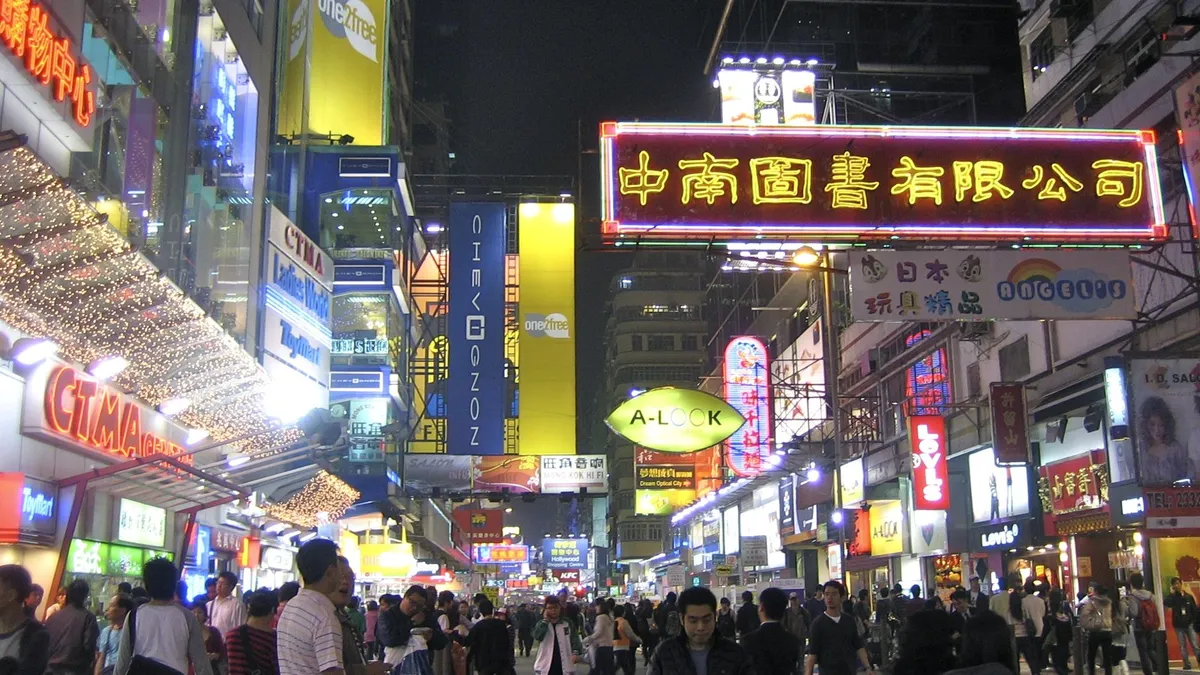
Neon is glass, gas and a steady hand. Each letter is drawn full size, heated and bent to follow the drawing, then filled and sealed. It is one of the few kinds of signage where the typography is made by the same person who makes the object.
Watch: a short video essay, with captions in English and Traditional Chinese.
Read the transcript
After dark, the street changes its typeface.
For decades, the city's signs were drawn by hand, then bent in glass.
A pawnshop sign is built to be read from the end of the block.
Each stroke of a character is a separate tube, filled with gas and sealed.
Newer signs mix neon with LED, and Chinese with English.
Many have come down, for safety and for cost.
The ones that remain are a record of the hands that made them.
Why the signs came down
Many signs have been removed over the past two decades, for safety, for maintenance costs and because LED is cheaper to run. What is lost is not only light but a particular hand: the curves of a character bent by someone who understood both calligraphy and glass.
An LED sign shows you a letter. A neon sign shows you how the letter was made.
Some signs have gone to museums and collections. Others survive where they always were, above restaurants, pawnshops and mahjong parlours that never saw a reason to change them.